
記事: The History of the Riviera Shirt
The History of the Riviera Shirt
There are certain garments that don’t so much go out of fashion as they do quietly wait to be rediscovered, and the riviera shirt is one of them. Long before it became shorthand for effortless summer dressing, it was born out of a very particular corner of history, one shaped by leisure, sunshine and a slow unravelling of the rules that had for so long dictated how a man should dress.


The French Riviera itself had been a magnet for the European upper classes since the 1800s, but it was really in the 1920s that it began to acquire its reputation as a place of a certain style, when the likes of F. Scott Fitzgerald and Picasso took to spending their summers there. Even so, it’s the years following the Second World War that most people picture when they think of the Riviera look. Cannes launched its film festival in 1946, and the coastline that followed filled with a new mix of people - old European aristocracy rubbing shoulders with American money, and an increasing number of film stars drawn south by the cameras. What made this era different wasn’t the wealth so much as the fact that people had started dressing down on purpose. This wasn’t a place to be seen in black tie, it was a place to be seen relaxing.
That new mood needed its own uniform, and the shirts that emerged from it were a direct reaction against the formality that had defined the decades before. Soft, unstructured, and usually in linen or a fine cotton, they were cut roomy enough to move in, worn open at the collar, sleeves rolled or left loose, and often untucked altogether, a small act of rebellion in an era where a properly dressed man was still expected to be buttoned to the throat. The films of the period tell the story better than words can. Cary Grant in 'To Catch a Thief' in 1955, and Alain Delon in 'Purple Noon' five years later, collar rolled and entirely unbothered, in a way that no amount of tailoring can really teach. This was a look built on the idea that true elegance didn’t need to try.

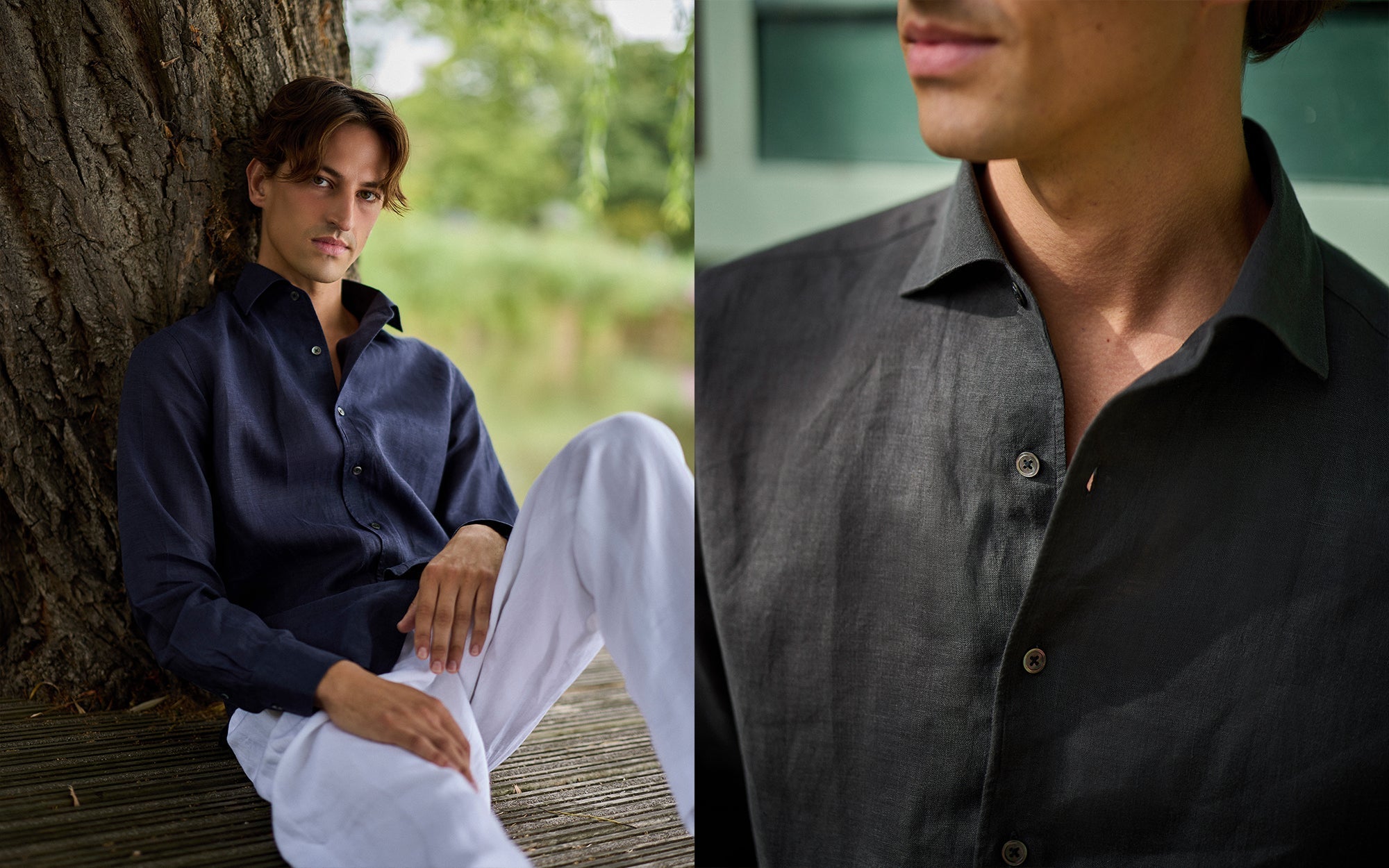
One detail in particular came to define the shirt’s silhouette: the one piece collar. Most shirts, including most of the riviera style shirts you'll find today, are made with a separate collar band that the collar itself is then stitched onto. A one piece collar skips that step entirely. It's cut from a single continuous piece of fabric that runs straight from the collar down into the front placket, no seam, no join. It sounds like a fairly minor technical difference, but it changes the whole character of the shirt. Without a collar band pulling everything into a sharp fold, the collar rolls naturally, almost lazily around the neck. It takes a genuinely skilled pattern maker to get it right, which is precisely why so few shirtmakers still bother with it today. It was never a loud detail, rather a quiet sign of real craftsmanship behind a very casual looking garment.


As the decades went on, the riviera shirt drifted in and out of view, occasionally revived by designers chasing that same sun-soaked nonchalance, but rarely made with the same care that defined the original. Cheaper reproductions swapped linen for viscose blends, one piece collars for standard construction, and the roomy holiday cut for something slimmer and, frankly, far less comfortable in the heat. The spirit of the shirt survived even as the substance behind it thinned out.

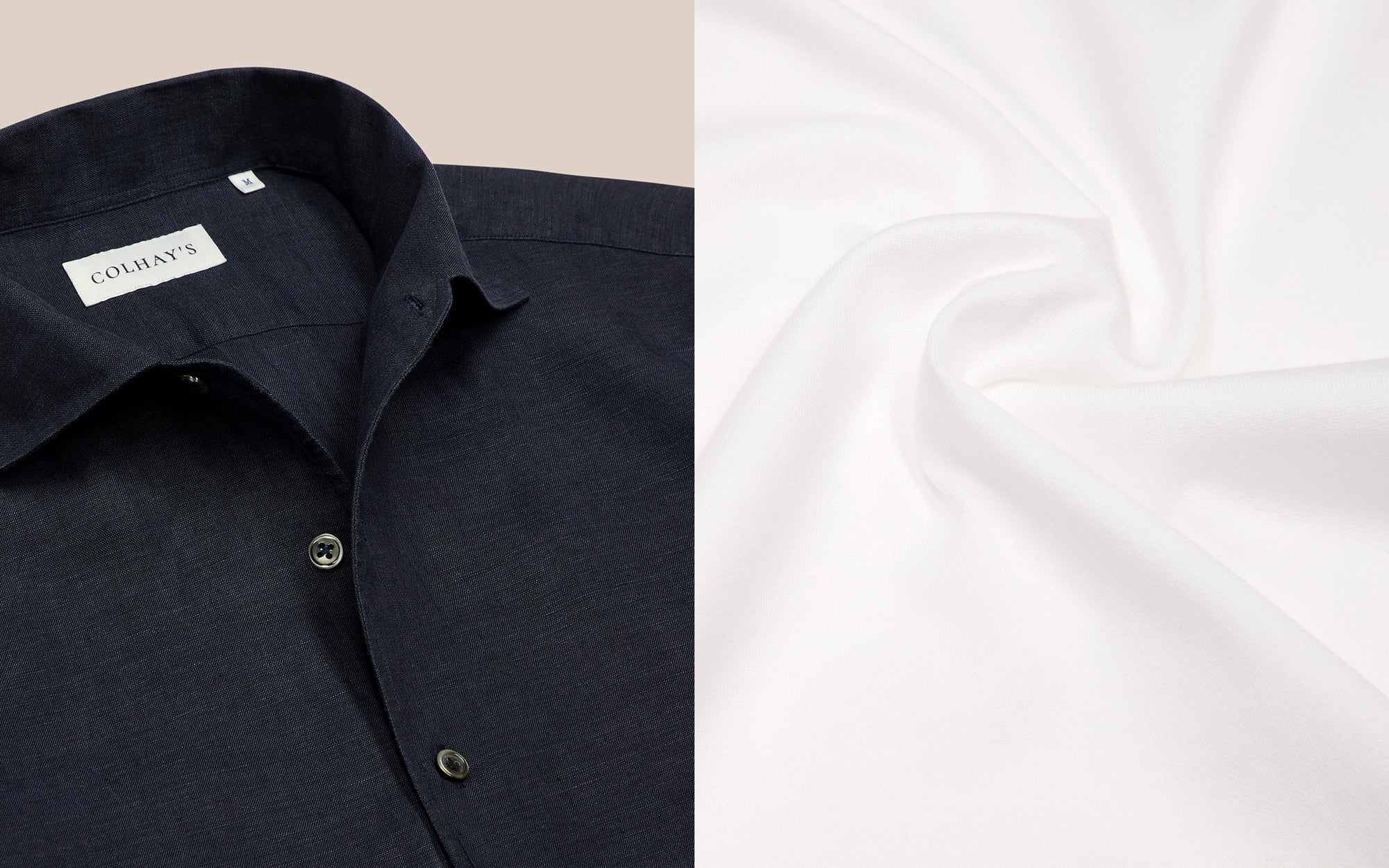
This is really the gap our French Linen One Piece Collar Riviera Shirt was made to close. We wanted to go back to what made the original shirts so good in the first place, rather than simply borrowing the silhouette. That meant sourcing linen grown in Normandy, where the climate suits the flax plant particularly well, and using only the longest fibres available to create a fabric with a genuine lustre and softness, rather than the papery, coarse linen so many people have come to expect. You’ll notice the odd small slub running through the weave, which is simply the nature of an honest natural fibre rather than a flaw to worry about.

It also meant committing to the one piece collar, despite how few pattern makers are still capable of executing it properly. We found ours in Japan, working with craftsmen who have spent decades refining exactly this kind of construction, and who brought the same meticulous attention to fit and finish that Japanese manufacturing has become known for the world over. That same care runs through every stage of the shirt, from the drape of the fabric to the fit through the body.

The result is a shirt that is deliberately roomier than most modern shirts, in keeping with that original holiday ease, with a collar that rolls softly rather than folding sharply, and a fabric that only gets better with wear, developing a natural patina and a slightly more lived in character the more it’s worn and washed.

We didn’t want to make a shirt that simply referenced this history. We wanted to make the version of it that would have actually earned its place on that coastline in the first place, and we think the quality speaks for that.